
Most of us were shown the same way to light a fire. Ball of newspaper at the bottom, kindling over the top, a log or two on that. It works, more or less. It also smokes, needs poking and often goes out while you are in the kitchen.
There is a better way, and it costs nothing to try tonight. Build the fire the other way up: big logs at the bottom, smaller ones above, kindling above that, firelighter right on top. Light the top and let it work its way down.
Why upside down works
It looks wrong, because flames go up. That is exactly the point.
In a bottom-up fire the flame sits underneath the wood. The logs above warm through and give off gas, which is where most of the energy in a log lives. That gas slips past the small flame and goes straight up the chimney as smoke.
Build it upside down and the flame starts at the top, with the whole stack beneath it. The fire works slowly downwards, and everything driven out of the wood below has to pass up through that flame on its way to the flue. So it burns instead of escaping. Cleaner light-up, far less smoke, more heat from the same load.
The fire burns down through the stack instead of up through it. Same stove, same logs, a fraction of the smoke.
What you need
- Two or three good split hardwood logs, properly dry
- A few smaller split pieces
- A dozen or so sticks of kindling
- One firelighter – the natural wood-wool and wax sort burn cleanest
No great wad of newspaper. If the stove is stone cold, use two firelighters rather than one.
The method
- Start with a clean grate. A thin layer of fine ash is fine, but clear it if it is covering the air holes.
- Lay the big logs flat on the bottom. Two or three of your largest split pieces, side by side, with a finger’s width between them.
- Cross a layer of smaller logs on top. At right angles to the ones below, again with gaps.
- Add the kindling above that. A dozen sticks, crossed rather than bundled, so flame can get between them.
- Firelighter on top. Not underneath, not tucked into the middle. Right on the summit of the pile.
- Open every air control fully before you strike the match, and open the flue damper if your stove has one.
- Light it and shut the door. If your stove’s manual allows it, leaving the door on the latch for a minute or two helps the kindling catch. Then close it and leave it alone.
Give it five minutes before you judge it. The top layer burns first, and the flame front creeps down through the stack.
Air controls, in order
Most stoves have two controls that matter: primary air, from below or through the grate, and secondary or airwash, which comes in above the glass and washes down over it.
Open both fully to light. Once the kindling has gone and the smaller logs are burning steadily – usually ten to fifteen minutes in – close the primary air down. The fire then runs on the airwash, which burns the gases coming off the wood and keeps the glass clear.
Set the airwash so you have a lively, bright flame. If the flames go lazy and dark, or the glass fogs, you have shut it too far. Controls vary, so check your own stove’s manual.
The first twenty minutes matter
The temptation, once a fire looks pretty, is to damp it down and make it last. Resist it. A stove brought properly up to temperature burns cleanly for the rest of the evening: warm flue, good draw, gases burning instead of condensing.
Throttle it early and you get the opposite. A smouldering fire tars up the flue, blackens the glass and gives less heat from more wood. Get it hot first, then turn it down.
Refuelling: little and often
Wait for a decent bed of glowing embers. You do not need flames, but you do need embers. Wood put onto grey ash will sit there and smoke.
- Rake the embers level, or pull them forward, and set the logs on top
- One or two logs at a time rather than one enormous one
- Do not pack the firebox out – leave plenty of room above the wood for flame and air
- Open the air up a little as you reload, then set it back once the wood has caught
Small loads, more often, is the whole trick. It keeps the fire in its clean-burning range instead of swinging between roaring and sulking.
Burn wood, and nothing else
Never put painted or treated timber, old fence panels, decking, MDF, chipboard, plywood or pallets in a stove. Never burn household rubbish, plastic, foil-lined packaging or glossy paper. The fumes are not something you want in the room, and the residue quietly wrecks the inside of a stove and flue. Dry, untreated logs and clean kindling. That is the list.
Keeping the glass clean
Blackened glass is nearly always one of three things: wet wood, too little air, or a fire that never got hot. Sort those and the airwash does most of the work, and a good hot burn will often clear a light haze on its own.
For the rest, there is an old trick that costs nothing. With the stove cold, screw up a sheet of newspaper, dampen it, dip it in the fine white ash and wipe the glass. The ash is a mild abrasive and lifts the tar. Buff off with a dry sheet. Nothing gritty – stove glass scratches.
Sweeping the chimney
Wood leaves more deposit in a flue than smokeless fuel does, so a chimney serving a wood burner wants sweeping regularly. At least once a year as a rule of thumb, and more often if the stove is lit most days through winter. A qualified sweep can see the state of your flue and will tell you what yours needs.

None of it works with wet wood
You can build the neatest upside-down fire in Sussex and it will still sulk if the wood is damp. If a log hisses or bubbles at the end grain, it is too wet, whatever it said on the bag. Our guide to properly seasoned firewood explains how to check.
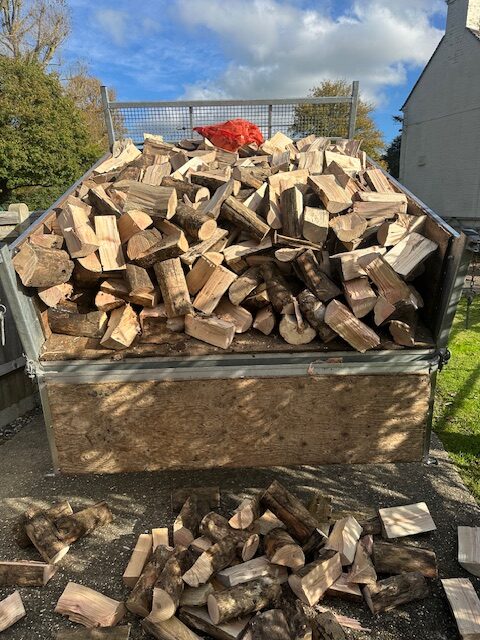
Our logs are hardwood, felled within 10 miles of the yard, split and barn stored in vented bags until they are ready to burn. A 2m³ load is £240 delivered, with a free XL net of kindling to get it going.